

Subsidence vs. Settlement:
A Comprehensive Guide to Foundation Movement, Cracks in Walls, and Subsidence Insurance Claims
If you are a homeowner, prospective buyer, landlord, or property developer, discovering a new crack in your wall can induce immediate panic. The mind often jumps straight to the worst-case scenario, assuming the property is suffering from severe house subsidence. However, it is essential to understand that not all structural movement indicates an imminent collapse or requires highly disruptive and expensive subsidence repairs. In the realm of structural engineering and building pathology, the physical movement of a property is generally categorised into two distinct mechanisms: settlement and subsidence.
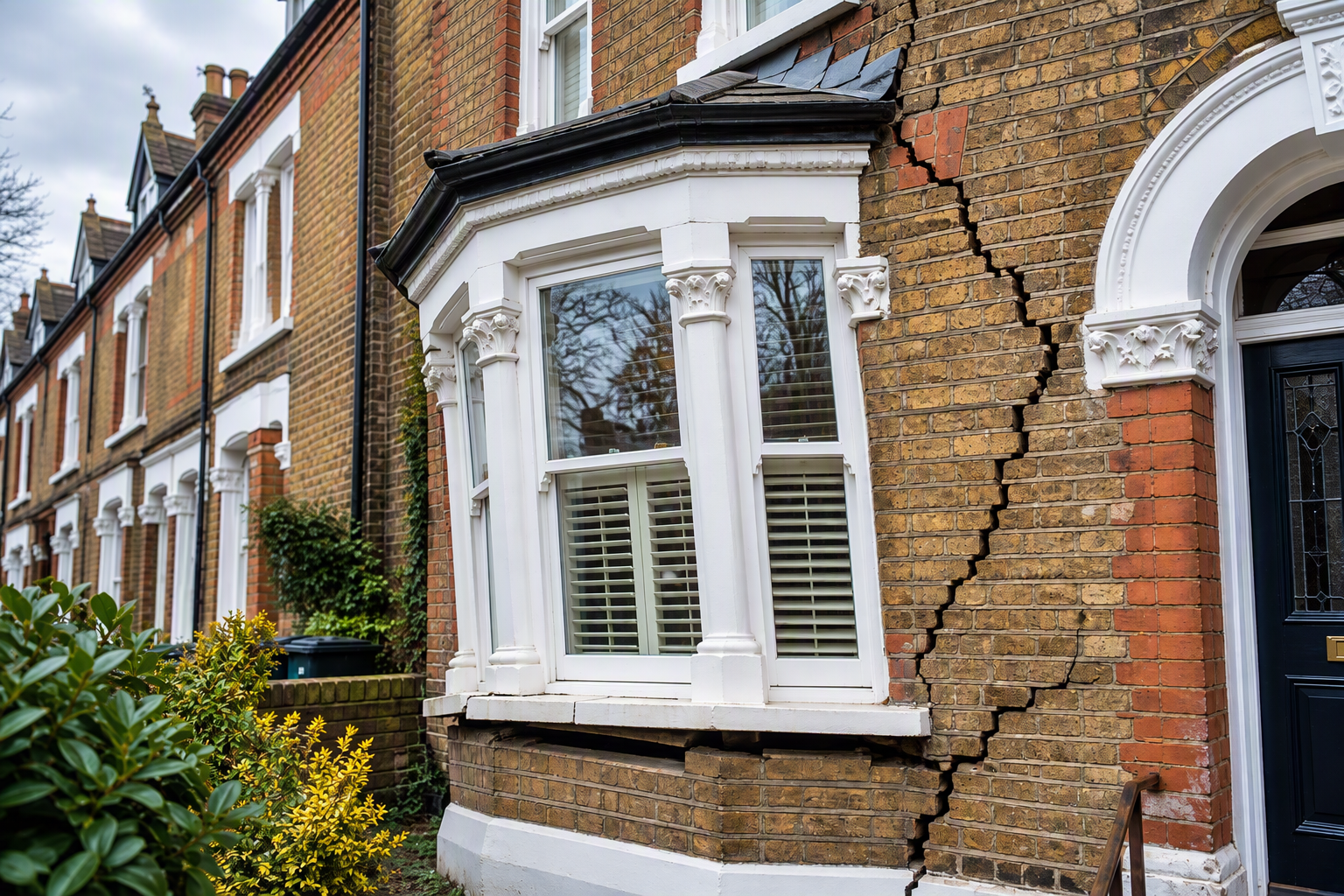
At Istidam Consulting, our chartered structural engineers conduct extensive subsidence surveys to accurately diagnose these exact issues. In this comprehensive guide, we will explore the critical differences between settlement and subsidence, how specific ground conditions exacerbate these defects, how to recognise the signs of subsidence, and how our expert structural surveys and long-term crack monitoring programs can support your property management and insurance claims.
Understanding the Core Concepts: What is Settlement?
Settlement is fundamentally defined as the downward movement of the ground, or any structure on it, caused directly by the load applied by the building itself. Essentially, the sheer weight of the building compresses the soil upon which the foundations have been laid. It is entirely normal for all buildings to undergo some degree of initial settlement as the sub-soil consolidates under the newly constructed load.
The timeframe and severity of this settlement depend heavily on the underlying geology.
- If a property is built upon non-cohesive granular soils, such as compact sand or gravel, this downward movement typically happens very quickly.
- In fact, in granular soils, this settlement will often have completely ceased by the time the construction phase is finished.
- Conversely, if the building is situated on cohesive clay sub-soils, the settlement process is much slower and can take 10 years or more as water is gradually squeezed out of the clay.
Problems typically arise when a building experiences what is known as differential settlement. This occurs when different parts of a building settle at different rates, or when foundations span across highly variable strata. Differential settlement can result in extensive and unevenly distributed settlement cracks across the building fabric. This is often characterised by vertical or diagonal cracks that are interrupted by window or door openings.
Understanding the Core Concepts: What is Subsidence?
Unlike settlement, subsidence is the downward movement of a building caused by external, below-ground factors that are completely independent of the building’s own weight. It happens when the foundations lose the support of the underlying ground strata. Identifying the exact causes of subsidence requires a systematic, thorough diagnostic process, as a variety of environmental and geological factors may be at play.
Based on extensive structural investigations, including information extracted directly from our internal field data, we regularly identify three primary culprits responsible for triggering subsidence:
- Shrinkable Clay Soil and Tree Roots: Differential movement is a classic characteristic of defects associated with clay shrinkage. The water content in the ground immediately adjacent to the main external walls may drop significantly, whereas the clay beneath the internal floors of the building remains completely unaffected. This causes the external walls to settle unevenly, resulting in subsidence cracks and out-of-plumb walls.
- Leaking Drains and Soil Erosion: If underground pipes crack or suffer joint failures, the escaping water can wreak havoc on the ground. For example, properties founded on sandy loam and gravel are highly susceptible to erosion when surface water is not adequately diverted. Defective guttering or damaged underground drains allow water to seep into the ground, which rapidly washes out fine soil particles and erodes the supporting sand strata.
- Sinkholes and Mining Subsidence: In certain geographical areas, deep excavations or leaking water can ingress into soluble geological deposits, such as gypsum, chalk, or limestone. This creates solution features, or sinkholes, which pose a serious subsidence problem because they are generally erratic, small in area, and notoriously difficult to locate accurately during a standard site investigation. Furthermore, active or historical mining under or adjacent to a building can also cause significant long-term subsidence.
The Hidden Dangers of Made-Up Ground
A significant source of severe differential settlement and subsidence relates to properties built on made-up ground. The bearing capacity of ground that has been created through uncontrolled end-tipping is frequently poor and highly variable.
- This made ground often consists of mixed, sometimes organic materials that can vary drastically in volume as their moisture content changes over time.
- Materials such as peat and soft alluvium, when used as backfill, are incredibly compressible and will settle under their own weight by a considerable magnitude.
- Placing any building over such unstable ground requires exceptional engineering judgement.
- In many cases, large differential settlements over made-up ground can only be avoided by utilising piled foundations.
Decoding the Cracks: Diagnosing Cracks in Walls
When property owners spot a crack, the immediate question is whether it is merely cosmetic or deeply structural. Crack patterns offer vital clues, but accurate diagnosis requires the expertise of a chartered structural engineer. At Istidam Consulting, we rigorously assess cracking in accordance with the Building Research Establishment (BRE) Digest 251: Assessment of Damage in Low-rise Buildings.
- Category 1 Cracks: Minor hairline cracks, both internal and external, often fall into this category. These cracks are typically confined to the external render layer or plaster and do not penetrate through to the internal load-bearing structure. They are generally the result of standard building material behaviour, such as thermal expansion and contraction or long-term creep, rather than signs of significant structural movement or foundation settlement. These do not normally justify major remedial works beyond standard redecoration to restore the appearance of the building.
- Category 2 Cracks: Cracks in this category generally indicate defects that affect the appearance of the structure but can still be treated easily using normal decoration and crack fill repairs.
- Category 3 and Above: More severe cracks often indicate active structural failure. Subsidence cracks typically form diagonally across masonry. However, vertical cracks can also form due to shear failure if the bricks contain overly coarse sand that creates a weaker internal bond between constituents. Furthermore, horizontal cracks on the external face of a wall, combined with discrepancies in the verticality of the wall above and below the crack, are very strong signs of subsidence.
It is also important to note that cracks are frequently misdiagnosed by untrained eyes. For instance, a crack between a front elevation wall and a return wall can actually be caused by “roof spreading” rather than ground movement. This occurs when a damp, poorly ventilated, or inadequately tied roof structure pushes outwards against the walls. Addressing this requires strengthening the roof structure and adequately restraining the roof hip, rather than needlessly underpinning the foundations.
The Cascading Effects: How Movement Causes Penetrating Damp
Structural movement does not just cause unsightly cracks; it actively breaches a property’s primary defences against the elements. The deterioration and failure of a building’s structure are generally associated with three principal defect risk areas: dampness, timber decay, and cracking or movement.
Any structural problems related to ground heave and settlement are highly likely to cause failure of the building’s damp proof membrane or damp proof course (DPC). Since the early 1900s, most houses have been constructed with DPCs made from materials like tar, bitumen felt, slate, and engineering bricks. Because some of these materials are quite brittle, even minor building movement can cause physical damage, snapping the barrier and allowing rising damp to enter the structure.
Furthermore, severe structural movement can compromise a roof’s weatherproofing layers and lead flashing, allowing rainwater to penetrate the property. Sustained water ingress can saturate brickwork, cause the decay of mortar joints, trigger fungal attack in structural timber, and corrode iron and steel components.
The Legal Implications of Neglecting Structural Defects
For landlords and property developers, ignoring the signs of severe structural movement carries significant legal risks. Building surveyors and professionals dealing with building defects must navigate a legal minefield surrounding maintenance and repair in residential properties.
Housing disrepair and statutory nuisance claims concerning landed property are governed by several stringent statutes.
- Under the Defective Premises Act 1972, a statutory duty of care is imposed in connection with the provision of dwellings.
- Section 1 of this Act dictates that anyone undertaking work in connection with the provision of a dwelling must ensure that the work is done in a professional manner, uses proper materials, and ensures the dwelling is fit for human habitation upon completion.
- Furthermore, if severe dampness caused by structural failure is prejudicial to the health of occupants, it can be classified as a statutory nuisance under the Environmental Protection Act 1990. Local authorities possess the power to serve repairs notices on owners requiring the performance of specified remedial works.
The Importance of a Professional Structural Survey
Because the symptoms of building defects are often overlapping, arriving at the correct diagnosis is not always straightforward. A single symptom, such as a cracked wall or a damp patch, can have a wide range of possible causes. It is critical that a structural survey is carried out by a chartered surveyor, or a chartered structural or civil engineer.
- The survey usually begins with a thorough desk study to review geological maps and memoirs, checking for local geological faults, soil types, or a history of local mining.
- The on-site appraisal involves a systematic top-down exterior overview—inspecting the roof, then upper walls down to the ground—followed by a methodical room-by-room internal inspection.
- The investigating engineer must meticulously check for the three principal defect risk areas and look for illicit alterations that may have compromised the building’s structural integrity.
- A well-documented structural engineer’s report is then prepared, which provides a concise account of the damage, logically explains the defect causations based on evidence, and recommends economic and practical remediation works.
Crack Monitoring: Why Patience is Often the Best Strategy
If major structural movement is suspected, the most prudent initial step is often not immediate, highly disruptive construction work. Current engineering practice actively avoids costly remedial works, such as underpinning, whenever possible. Research into sub-soil related failures has revealed that, in the long term, movement in the majority of severely affected buildings will eventually return to an acceptable or ‘safe’ level of distress as subsequent weather patterns normalise.
Therefore, if it is suspected that building movement has not completely ceased, consideration should always be given to monitoring its progress before making any definitive decisions on heavy remedial works. At Istidam Consulting, we can implement rigorous long-term structural monitoring programs to track structural behaviour.
- This process may involve fixing crack monitoring tell-tales across cracks. These transparent plastic sheets with gridlines allow movement to be measured, indicating both the amount and the direction of the structural shift.
- We can also establish levelling grids and carry out precise plumb and level surveys to accurately track settlement over an extended period.
Subsidence Insurance Claims and Warranties: Are You Covered?
Dealing with subsidence damage is highly stressful, and understanding your buildings insurance position is vital. Many property owners rely on warranties, such as those provided by the National House Building Council (NHBC), which is the largest provider of warranty insurance for housing in the UK.
While major structural damage might seem like a clear-cut subsidence claim, there are strict conditions and caveats. NHBC warranties and standard buildings insurance policies typically have explicit exclusions, and they will generally not be liable for:
- Standard wear and tear.
- Damage caused by neglect or a failure to carry out normal property maintenance.
- Dampness, condensation, or shrinkage that is not directly caused by a specific structural defect.
- Defects or damage resulting from the builder complying with written instructions regarding design, materials, or workmanship given by the first owner.
- Any loss of enjoyment, inconvenience, or consequential loss affecting the value of the home.
Furthermore, it is a sobering reality that the majority of structural defects that surveyors encounter actually result from bad workmanship, inadequate supervision during the construction phase, inadequate foundations, or a poor choice of building materials.
This is precisely where Istidam Consulting adds immense value for our clients. If you need to make an insurance claim for subsidence or structural failure, the burden of proof is heavily reliant on conclusive technical evidence. We provide comprehensive structural engineer reports, compile robust test results and desk studies, and manage the collection of long-term monitoring data. Our unbiased, highly detailed reporting gives you the exact diagnostic evidence required to present a clear, compelling case to your insurance provider or loss adjuster.
Conclusion
Whether you are dealing with minor hairline cracks stemming from benign thermal expansion, or severe diagonal cracks caused by deep soil erosion, guessing the cause is never a safe option. Distinguishing between harmless early-stage settlement and damaging, active subsidence requires professional, chartered expertise.
Do not let foundation movement compromise the safety, value, or architectural integrity of your property. Contact Istidam Consulting today to schedule a comprehensive subsidence survey. Our expert engineers are ready to accurately diagnose your property’s defects, design highly practical subsidence repair strategies, and provide the unshakeable technical backing you need for a successful subsidence claim.
——— WHAT OUR CLIENTS SAY ———
Trusted By Clients Across The UK
EXCELLENT Based on 80 reviews
 Posted on Google

 Tom25. March, 2026We cannot recommend Istidam highly enough. Over the course of a challenging three-year legal and insurance battle, Tarek proved to be nothing short of exceptional. His expertise in civil and structural engineering was invaluable, but what truly set him apart was his unwavering support, patience, and genuine understanding throughout the entire process. Tarek was consistently professional, highly responsive, and incredibly thorough in his advice. During what was an extremely stressful and complex period for us, he provided not only technical clarity but also much-needed reassurance and confidence at every stage. Having him on our side felt like a true blessing. His guidance made a significant difference to both the outcome and our peace of mind. We are profoundly grateful for his support and would strongly urge anyone considering any kind of building or structural project to consult Istidam first. It’s simply not worth proceeding without their expertise. Thank you so much for everything.Posted on Google
 A Olczykowska10. March, 2026Great service and speedy responses. Both Tameem and Tarek were really helpful and friendly. They supported us throughout the process of getting a Structural Report done for a property.Posted on Google
 P Llewellyn19. February, 2026I needed a structural report on our church roof prior to the installation of solar panels. Istidam provided a prompt, thorough and professional service, which was very pleasing.Posted on Google
 M Robertson18. February, 2026Prompt response to a request for a professional survey at a competative price. Report produced promptly with good attention to detail. would use again, if the need arose.Posted on Google
 S HARVEY17. February, 2026Istadam contacted me promptly after an initial enquiry. I was impressed by their professionalism and they carried out an inspection of my house at a date and time that suited me. The structural engineer who arrived, on time, immediately put my mind at rest and offered a practical solution to my query and also looked around the whole of my property to ensure there were no other signs that would indicate a structural problem. I highly recommend their professionalism and service.Posted on Google
 M carrington22. January, 2026⭐️⭐️⭐️⭐️⭐️ Excellent service from Tarek, Tameem and Yosra We used them during the purchase of a property with historic subsidence and they were professional, clear, and very reassuring throughout. Their detailed report helped me reduce five figures off the asking price, which made a huge difference. They were also fair on price and happy to match other quotes where companies had similar qualifications and insurance. Would thoroughly recommend Tarek and the team to anyone looking for a reliable and professional structural engineerPosted on Google
 A Fitzgerald16. January, 2026My husband and I couldn't be more grateful for the support, expertise and professionalism of Tarek from Istidam Consulting. He continually went above and beyond to ensure that a structural survey on our dream family home was completed and amended in line with what was required for our mortgage lender. We are beyond grateful that although 'all in a days work' for Tarek, he was able to recognise the monumental impact of his service in enabling us to provide an exciting future and 'forever home' for our young family. We couldn't recommend this company more!Posted on Google
 J Strange9. January, 2026I highly recommend their services. In addition to the detailed structural report, Tameem has been extremely helpful in responding thoroughly, promptly and professionally to all of our questions. He has gone out of his way to make sure we were at ease and understood the structural work involved. Thank you Istidam!Posted on Google
 N D5. December, 2025Very thorough and meticulous structural engineer inspection and report - highly highly recommend. MICE qualified.Posted on Google
 Jappleyard9327. October, 2025We got Tarek in to provide a structural report on the property after concerning cracks flagged in our building survey from another provider. Tarek picked up on a lot more potential issues with the property and I think has saved us tens of thousands of £s. He's very thorough and knowledgable and would highly recommend his services.


Delivering Innovative, Safe and Sustainable Structural Solutions for Residential, Commercial and Industrial Projects
Useful Links
Solutions
Contact Info
Phone
+44 1392984211
+44 7514852513 (WhatsApp)
info@istidam.co.uk
Address
The Gallery, The Quay, Exeter, UK