

The Ultimate Homeowner’s Guide to Chimney Removal
Structural Risks, Gallows Brackets vs Steel Beams, and Party Wall Rules
When homeowners look to remodel older properties to create open-plan living spaces or increase the size of a bedroom, chimney breast removal is often one of the first projects that comes to mind. While reclaiming that lost floor area is highly appealing, a chimney is rarely just a decorative feature. It can be a massive, heavy masonry structure that is deeply integrated into the structural fabric of your home.
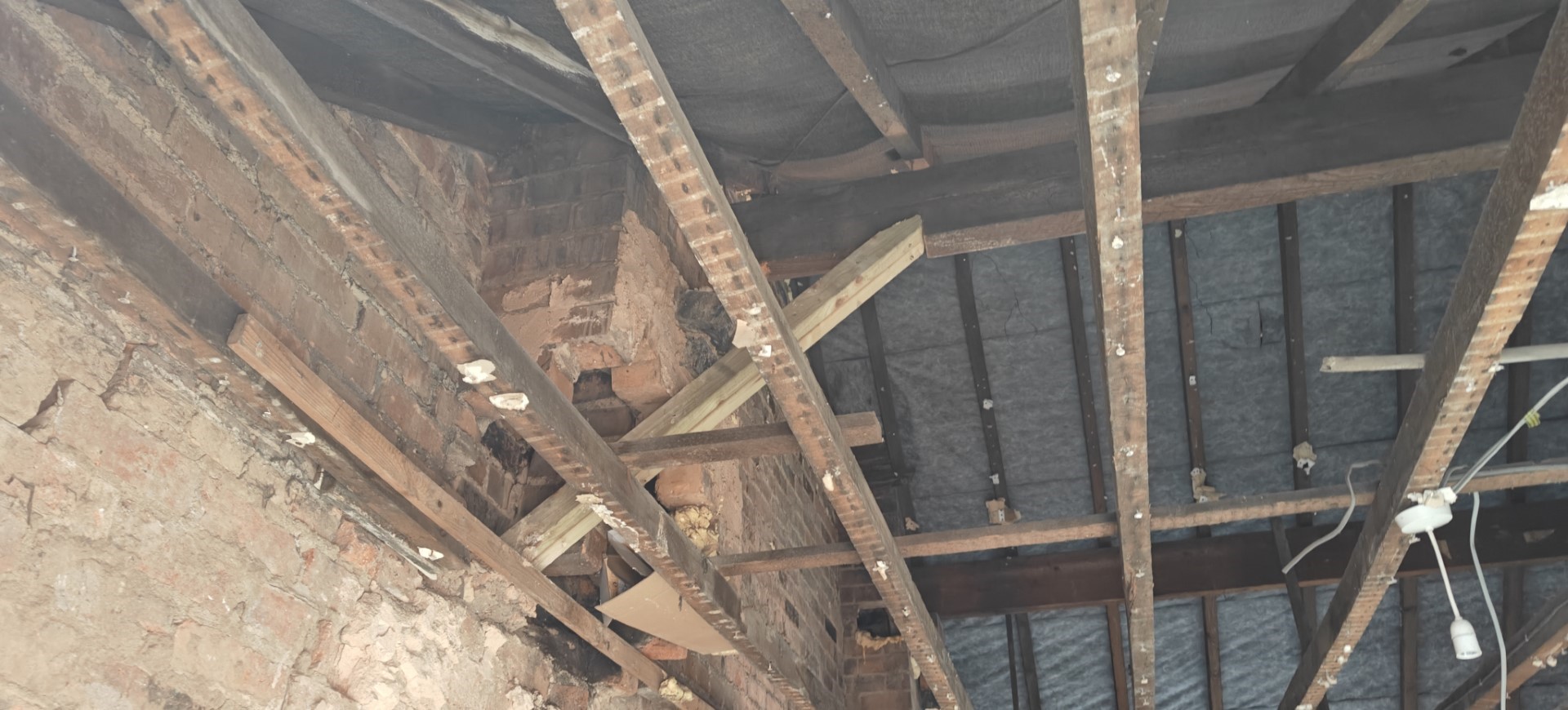
At Istidam Consulting, our structural engineers frequently investigate properties suffering from severe structural distress caused by poorly executed historical chimney breast removals. Drawing on our extensive field data and the established building pathology literature, we have compiled this comprehensive guide.
Whether you are considering a partial chimney removal or full chimney stack removal, this guide will walk you through critical stability issues, the dangers of outdated support methods such as gallows brackets, the Building Regulations your project must meet, and the strict Party Wall Act rules governing shared party walls.
The Hidden Structural Role of a Load-Bearing Chimney Breast
Before removing any masonry, it is vital to understand what your chimney actually does. Beyond providing a flue
for smoke, chimney breasts can act as massive structural pillars within your home.
- Removing a chimney breast to increase floor area actively removes a vital “buttress effect” that originally provided lateral restraint and stability to the external or party walls.
- Furthermore, roof structures are often heavily reliant on the chimney. The chimneys of a main building frequently carry one side of the roof purlins, meaning that a significant portion of the roof’s load is transferred directly to the ground through the chimney breast.
- When inspecting an old fireplace opening and flue before removal, it is also critical to check that no bressummers, ends of timber joists, or structural beams are buried within the flue walls.
The Dangers of Partial Chimney Removal Without Steel Beam Support
A “partial removal” typically involves knocking out the chimney breast on the ground or first floor to free up space, while leaving the heavy chimney stack intact within the loft space and above the roofline.
According to our field data, partial removal without adequate support can lead to severe long-term issues, including potential movement of the remaining chimney structure and surrounding areas of the property. Removing the chimney breast without adequate support for the upper section can make the remaining chimney section unstable.
Leaving hundreds of kilograms of unsupported brickwork hanging in your loft is a massive risk for several reasons:
- Wind Loading and Weathering: The exposed upper section of a chimney stack above the roof is constantly subject to wind loads. Without solid support from the ground up, this wind loading introduces additional stress to the surrounding structure. Over time, this dynamic movement weakens the bond between the bricks and mortar, significantly increasing the risk of cracking in the masonry.
- Health and Safety Hazards: If a retained stack in the roof space lacks support after the breasts below have been removed, it can form a severe health and safety hazard. The bricks could physically disassemble from the stack, crash through the ceiling, and form an eccentric load on the party wall below, utterly compromising the property’s structural integrity.
- Timber Creep: We often find historic alterations where a partially removed chimney is precariously supported by a timber trimmer joist. This is not a viable permanent structural solution. Under sustained heavy masonry loading, the timber will undergo “creep” (long-term sagging), which will inevitably lead to ongoing defects and damage to the chimney structure and the party wall.
The Danger of Chimney Breast Gallows Brackets: Why They Are No Longer Recommended
Historically, when builders partially removed a chimney breast, they would support the remaining masonry in the loft using steel angle supports known as “gallows brackets,” which were bolted directly into the party wall.
If your builder suggests using gallows brackets today, you should immediately seek a second opinion. The use of gallows brackets to support partially removed chimneys is no longer appropriate in current design standards due to the eccentricities and instabilities they introduce to the party wall.
What is Eccentric Loading?
When a heavy chimney stack is supported by a bracket bolted to a wall, the weight does not push straight down through the centre of the wall. Instead, it pushes down at an offset distance, creating a twisting or bending force known as an “eccentric load”. This structural arrangement introduces eccentricities to the supporting walls, heavily compromising the structural integrity of the party wall and causing it to crack and bow.
The Risk of Unknown Neighbouring Chimney Breast Removals
The most significant danger of gallows brackets arises when the chimney is a shared structure on a party wall. Even under the withdrawn, historical standards where gallows bracket specifications were sometimes permitted, there were extremely strict prerequisites for their adoption.
- The chimney stack had to project no more than 340 mm from the wall face.
- The brickwork could not be laid in weak lime mortar.
- Critically, gallows brackets could absolutely not be adopted on both sides of the same party wall.
This last point is crucial. As a homeowner, you have no immediate way of knowing what structural alterations have been carried out on your neighbour’s side of the shared chimney. If your neighbour has already removed their chimney breast and installed gallows brackets, adding brackets to your side of a relatively thin, single-skin party wall can cause catastrophic failure.
Our field data highlight actual instances in which historical structural alterations on the other side of the party wall within a neighbouring property caused the party wall and chimney to crack due to combined eccentric loading. In severe cases, an overloaded party wall in poor condition will lack the structural capacity to support these combined eccentric forces, increasing the risk of progressive collapse.
Criteria for a Safe Structural Arrangement (Partial Chimney Breast Removal)
If you intend to propose a partial chimney removal, it must be rigorously planned and designed by a qualified structural engineer. At Istidam Consulting, we stipulate that specific structural criteria must be met to ensure the long-term safety of the building.
If a chimney is partially removed, the structural arrangement generally requires the introduction of a steel beam (RSJ).
- This involves inserting a suitably specified structural steel beam at the first-storey floor or ceiling level to safely carry the weight of the retained chimney stack.
- The ends of this steel beam must bear directly onto solid, load-bearing masonry walls or be securely fixed to a supporting steel post.
- Introducing this beam may also require additional structural alterations, such as installing new lintels above adjacent doors and window apertures so that the wall below can adequately support the new beam’s concentrated loads.
- The complete structural calculations and design—including the sizing of the beam, the specification of any steel posts, and all associated structural connection details—must be provided by a competent structural engineer.
Clashes with Existing Roof Structures
A major complication during chimney breast removal is how the chimney currently interacts with your roof structure. You cannot simply pull the bricks away if they are holding your roof up.
- Purlin Support: Roof purlins (the large horizontal timber beams supporting the rafters) often bear directly on the chimney stack facing wall or protruding bricks within the roof space. If you remove the chimney, these purlins become unsupported, leading to significant sagging of the roof structure and eccentric loading on the remaining walls. In such cases, strengthening works are required, such as resin-anchoring a steel connection system to the party wall to bolt and restrain the purlins, or completely replacing the purlin with a longer one that reaches the next load-bearing wall.
- Ridge Beams: In loft conversions, a steel ridge beam is sometimes incorrectly supported directly on the remaining chimney breast. Chimney walls were constructed to provide flues for smoke and often lack the workmanship or structural strength to safely support a concentrated point load from a steel roof beam.
- Lateral Restraint: When a chimney breast is removed within the roof space, the rafters surrounding the resulting opening can rotate in plan if they are not adequately strengthened. If the chimney stack previously provided a degree of lateral stability to the roof construction, its removal requires the introduction of an alternative lateral restraint structure to maintain the stability of the roof.
Full Chimney Stack Removal: The Safest but Most Complex Option
Given the complexities, costs, and risks associated with designing and installing steel beams in awkward loft spaces, complete removal of the chimney is often the most sensible path. Removing the chimney entirely down to the ground floor level is frequently considered the most cost-effective solution in the long run. By removing the stack completely, including the portion above the roofline, you eliminate the risk of heavy masonry falling, cure potential water ingress issues from failing roof flashings, and entirely remove eccentric loads from your walls. However, this proposal has to consider whether the structural arrangement of the property would still be stable following the removal of the chimney, and this must be determined by a competent chartered structural engineer. A methodology for repairs to the party wall following the removal must also be determined.
Furthermore, taking the chimney stack down completely introduces a new set of legal and logistical challenges, particularly if you live in a terraced or semi-detached house.
Legal Issues with Shared Chimneys and The Party Wall Act
If your chimney stack above the roofline is shared with the adjacent property, it straddles the boundary line. You cannot legally or physically remove your half of an external stack without severely impacting your neighbour.
- Removing the stack completely above the roofline requires you to liaise with your neighbours to obtain their formal consent, as the stack must be removed in its entirety.
- You cannot leave your neighbour’s half of the chimney standing unsupported. Removing the chimney completely could actually exacerbate instability in the party wall if your neighbour also has an unsupported chimney breast on their side of the party wall.
- Any excavation or structural alteration works proposed on a shared boundary are subject to the Party Wall etc. Act 1996.
- As the homeowner, you are legally required to provide relevant Party Wall Notices to the owners of the adjacent property before carrying out the works.
- If your neighbours dissent (disagree or refuse to consent) to the proposed works, further legal Party Wall procedures must take place, and a formal Party Wall Award needs to be drafted and issued by appointed party wall surveyors before you can commence construction.
Making Good the Roof and Fire Safety
If full removal is agreed upon, the project does not end when the bricks are gone.
- Weatherproofing: Once the shared stack is removed, you are responsible for making good the roof on both sides of the party wall. This involves infilling the void where the flue once was with new masonry, installing new continuous rafters, replacing the roofing battens, and ensuring the weatherproofing tiles and membranes are adequately patched with sufficient overlaps in line with current standards.
- Fire Walls: If you are removing a chimney and modifying the party wall within the loft space, be aware of fire safety regulations. Constructing or altering a firewall on top of a party wall is considered controlled building work and falls under the jurisdiction of Building Regulations. Under Regulation 3 of the Building Regulations Approved Document B (Fire Safety), any alteration that affects a building’s compliance with fire safety requirements is defined as a “material alteration” and requires strict building control approval.
Protect Your Property with Istidam Consulting
Chimney breast removal is a major structural undertaking. It is not a DIY project, and it should never be entrusted to a contractor who casually suggests throwing up a pair of gallows brackets and hoping for the best.
As a property owner, you have a statutory obligation under the Construction (Design and Management) Regulations 2015 to ensure you have taken reasonable measures to confirm the competency of the professionals carrying out construction works on your property.
Whether you want to safely remove an obsolete chimney breast in your living room, or you are worried about the leaning chimney stack above your roof, Istidam Consulting is here to help. Our chartered structural engineers provide detailed structural appraisals, produce exact structural calculations for steel beam supports, and can guide you seamlessly through the complexities of the Party Wall etc. Act 1996.
Do not risk the structural integrity of your home with undocumented and unsafe alterations. Contact Istidam Consulting today to arrange a comprehensive structural survey and ensure your home improvement project is built on a foundation of professional engineering excellence.
——— WHAT OUR CLIENTS SAY ———
Trusted By Clients Across The UK


 Trustindex verifies that the original source of the review is Google.
 Trustindex verifies that the original source of the review is Google.
 Trustindex verifies that the original source of the review is Google.
 Trustindex verifies that the original source of the review is Google.
 Trustindex verifies that the original source of the review is Google.
 Trustindex verifies that the original source of the review is Google.
 Trustindex verifies that the original source of the review is Google.
 Trustindex verifies that the original source of the review is Google.
 Trustindex verifies that the original source of the review is Google.
 Trustindex verifies that the original source of the review is Google.


Delivering Innovative, Safe and Sustainable Structural Solutions for Residential, Commercial and Industrial Projects
Useful Links
Solutions
Contact Info
Phone
+44 1392984211
+44 7514852513 (WhatsApp)
info@istidam.co.uk
Address
The Gallery, The Quay, Exeter, UK